Iryna Zarutska
On August 22, 2025, a horrific and unprovoked knife attack aboard a public transit train in Charlotte, North Carolina, claimed the life of 23-year-old Iryna Zarutska, a Ukrainian refugee who had fled her war-torn homeland in search of safety. The senseless stabbing, committed by a repeat violent felon, shocked the nation and triggered severe criticism of progressive "soft-on-crime" judicial policies. The brutality of the incident, coupled with the systemic failures that allowed a dangerous criminal to remain on the streets, has made the case a focal point for nationwide debates surrounding public safety, bail reform, and transit security.
Victim Biography

Iryna Zarutska fled the war in Ukraine only to be killed in America.
Iryna Zarutska was born on May 22, 2002, in Kyiv, Ukraine. As a young adult, she studied at Synergy College in Kyiv, where she successfully earned a diploma in art and restoration. In August 2022, following the escalation of the Russian invasion of Ukraine, Zarutska, along with her mother, sister, and younger brother, immigrated to the United States to escape the violence. Her father was forced to remain behind due to Ukrainian martial law restrictions.
The family settled in the Charlotte metropolitan area, residing with relatives in Huntersville, North Carolina. Zarutska moved to Charlotte's NoDa neighborhood with her boyfriend, enrolled in community college classes to perfect her English, and found employment at a local pizzeria in the Lower South End. Described by loved ones as a gentle, trusting, and ambitious young woman, she was working diligently to build a peaceful life and achieve the American dream in what she believed was a safe harbor.
Details About the Crime
On the night of August 22, 2025, Zarutska finished her shift at the pizzeria and boarded a southbound LYNX Blue Line light rail train at the Scaleybark station at approximately 9:46 p.m. to commute home. Surveillance footage captured her sitting down, listening to music, and looking at her phone. Seated directly behind her was Decarlos Dejuan Brown Jr., who had been riding the train line for hours, exhibiting erratic behavior, pacing, and laughing to himself.
Four minutes after Zarutska boarded, without any prior interaction or provocation, Brown pulled a folding pocketknife from his hoodie, stood up, and violently stabbed Zarutska three times from behind. The attack inflicted deep wounds to her neck—severing her right jugular vein—as well as her right breast, cutting her left carotid artery, and wounding her left knee.
As the brutal assault unfolded, the chilling realities of modern societal apathy were captured on transit cameras. While a few passengers scattered in panic, multiple onlookers froze or simply watched the graphic violence occur. According to initial reports, none of the nearby passengers moved to actively intervene, confront the attacker, or render immediate, life-saving aid to the bleeding young woman. Zarutska remained conscious or semi-conscious for nearly a minute, cowering in terror, before collapsing onto the floor of the train car. She became unresponsive shortly thereafter and was pronounced dead at the scene when emergency responders arrived at the East/West Boulevard station.
Following the stabbing, Brown casually walked away from the victim. Witnesses and investigators reported that as he paced through the train car splattering blood, he loudly muttered, "I got that White girl," revealing a stark racial undertone to the horrific execution. Brown exited the train at the next stop and was apprehended by Charlotte-Mecklenburg police officers on the station platform minutes later.
Details About the Suspect
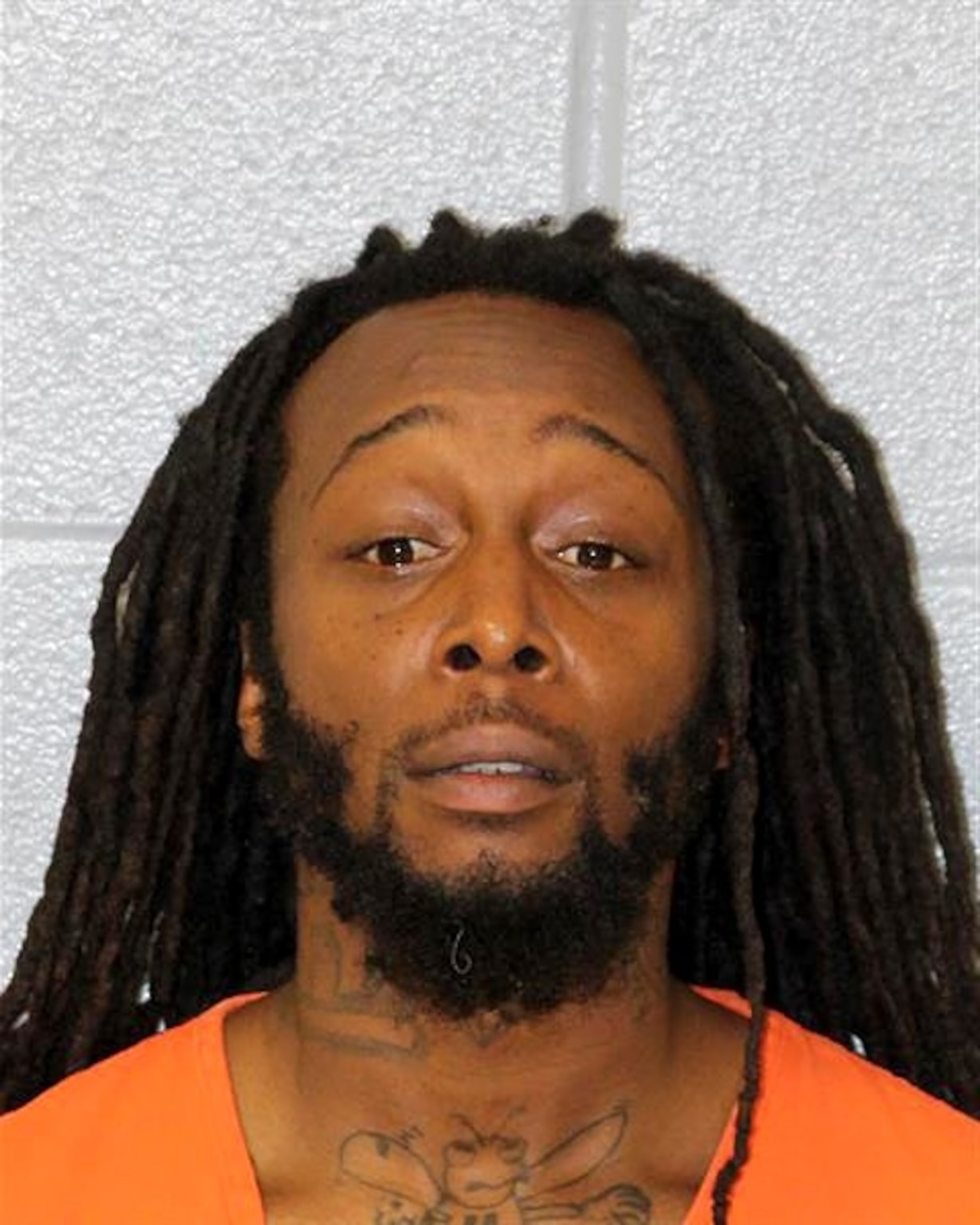
Decarlos Dejuan Brown Jr. had a lengthy history of violent crime before the attack.
Decarlos Dejuan Brown Jr. (born October 1, 1990) is a 34-year-old career criminal with an extensive history of violence and lawlessness. Prior to the murder of Zarutska, Brown had been arrested at least 14 times in Mecklenburg County, North Carolina, with a rap sheet dating back to 2007. His prior convictions included felony breaking and entering, and a 2015 conviction for armed robbery with a dangerous weapon and larceny, which resulted in a five-year stint in state prison until his release in September 2020.
Following his release from prison, Brown continued to cycle through the justice system. His family stated that he suffered from severe schizophrenia and delusions, which worsened significantly in 2024. Despite his dangerous history and repeated erratic behaviors—including an arrest in January 2025 for repeatedly misusing the 911 emergency system—local judicial authorities continually permitted him back onto the streets without adequate supervision or secure confinement.
Controversy
The slaughter of Iryna Zarutska ignited intense national outrage, with conservatives and public safety advocates pointing to the tragedy as a textbook example of the catastrophic failures of left-leaning, "soft-on-crime" judicial policies. Critics focused heavily on the local Mecklenburg County magistrate system, lambasting lax bail protocols that allowed a multi-time convicted violent felon to walk free on low-level or cashless bonds despite clear signs of escalating danger to the public. During a subsequent U.S. House Judiciary Committee field hearing held in Charlotte, law enforcement personnel openly condemned the local judicial framework, calling the magistrate system entirely broken.
Further controversy erupted over the apparent racial element of the crime, underscored by Brown's exclamation, "I got that White girl," as he paraded through the train car. Conservative commentators noted a hypocritical double standard in mainstream media coverage, pointing out that if the racial dynamic had been reversed, the incident would have sparked nationwide civil unrest and immediate federal hate-crime designations. Additionally, the complete failure of transit security was heavily criticized; despite the presence of CATS officers in an adjacent train car, no security personnel were present in Zarutska’s car to protect fare-paying passengers from known vagrants and dangerous predators.
Current Status/Outcome
Following his arrest on August 23, 2025, Decarlos Brown Jr. was indicted by a state grand jury for first-degree murder. Recognizing the severe nature of the assault on a public utility, federal authorities intervened. In September 2025, the U.S. Department of Justice leveled federal charges against Brown for committing an act of violence causing death on a mass transportation system, a capital-eligible offense carrying a maximum penalty of execution.
The tragedy prompted swift legislative action in North Carolina. The General Assembly rapidly drafted and passed "Iryna's Law" (House Bill 307), which went into effect on December 1, 2025. The statutory package enacted widespread criminal justice reforms designed to restrict the use of cashless bail for repeat offenders, enforce stricter transit security mandates, and streamline the path toward resuming capital punishment in the state.
The legal proceedings against Brown have faced continuous delays due to his mental state. In December 2025, a state psychological evaluation deemed him "incapable to proceed" with a state trial. In May 2026, federal evaluators similarly concluded that Brown is mentally incompetent to stand trial at the federal level. A federal judge is scheduled to hold a formal competency hearing in June 2026 to determine whether Brown will be sent to a secured federal medical prison facility for long-term treatment in an attempt to restore his capacity to face the death penalty.
Sources
- Wikipedia: Killing of Iryna Zarutska
- WCNC Charlotte: Decarlos Brown found incompetent to stand trial in federal court
- The Assembly NC: DeCarlos Brown Again Found Mentally Incompetent to Stand Trial
- U.S. Department of Justice: Justice Department Charges Light Rail Attacker with Federal Crime
- Carolina Journal: Hearing in Zarutska killing officially bumped back to October
- WCNC Charlotte: Rights group seeks federal hate crime probe in Charlotte light rail stabbing
- City Journal: Iryna Zarutska: America's Mental-Health System Betrayed Her